

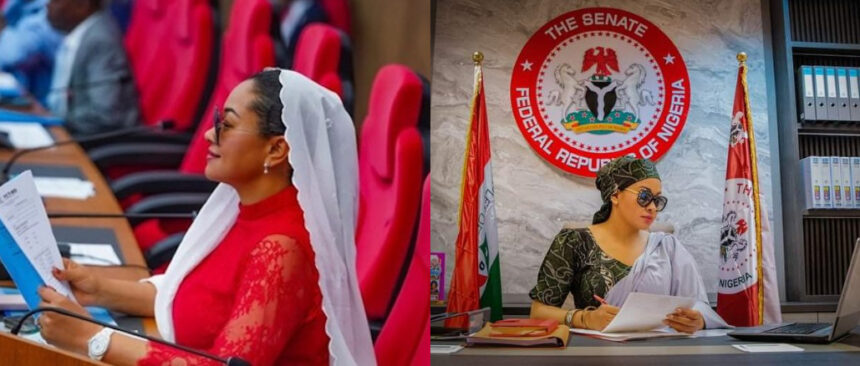
Nigeria’s Upper Chamber witnessed the triumphant return of Senator Natasha Akpoti-Uduaghan, representing Kogi Central, on Tuesday, October 7, 2025, following a six-month suspension that sparked widespread debate. Her cheerful presence in the Senate chamber contrasted sharply with the controversy surrounding her earlier ousting, as plenary resumed post a 10-week recess under Senate President Godswill Akpabio’s leadership.
Akpoti-Uduaghan’s reinstatement culminates months of turmoil triggered by her protest against Akpabio’s February 20 seat reassignment, leading to a March suspension for alleged misconduct. Supporters and activists, including Aisha Yesufu of Bring Back Our Girls fame, stood with her, observing proceedings from the gallery. “I’m back to serve Kogi Central – no apology for standing firm,” she affirmed, spotlighting her advocacy persistence.
Her sealed Senate office, Suite 2.05, reopened recently via Alabi Adedeji, Deputy Director of National Assembly Sergeant-at-Arms, facilitated her comeback. Akpoti-Uduaghan had weeks earlier lambasted Akpabio as a “dictator,” decrying perceived intolerance toward dissent. “Senator Akpabio acted like a governor over servants – unacceptable,” she criticized.
A July Federal High Court ruling by Justice Binta Nyako branded her suspension “excessive and unconstitutional,” stressing representational deprivation. Lawyer Victor Giwa underscored court validation of her suspension completion and parliamentary return entitlement.
Tuesday’s session marked full lawmaker turnout, signaling restored legislative activity. Akpoti-Uduaghan’s resilience amid political headwinds underscores steadfast constituent dedication. Her comeback intertwines judicial vindication with renewed Senate participation, amid ongoing transparency and governance advocacy.
The senator’s reappearance amid applause reflects charged dynamics between assertive parliamentary personalities and Nigeria’s institutional accountability discourse.