

Friday Lines (105) With;
Engineer Abubakar Alkali (PhD)
20/1/26
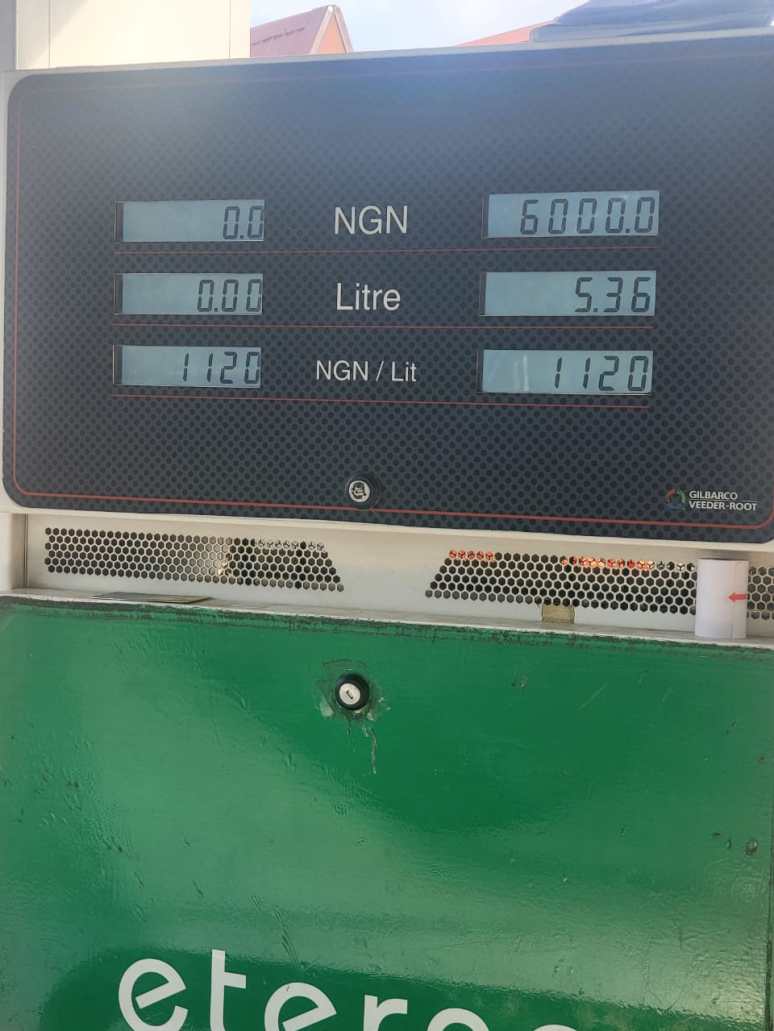
The practice of ‘cheating through meter manipulation’ at filling stations has been ongoing since records began. However, the issue becomes more critical when juxtaposed with the very huge spike in the ex-pump price of premium motor spirit (PMS) a.k.a petrol from N200 per litre pre-Tinubu’s Presidency to an average of N1,000 or more today depending on the location.
The over 800% jerk up in the price of petrol and other petroleum products was as a result of the presumed and theoretical removal of fuel subsidy by President Tinubu in 2023 which sent prices of goods and services into the skies and mostly beyond the reach of the average Nigerian.
The sharp practice in petrol meter wheeler-dealing involves the manipulation of the meter at the pump by the fuel attendants such that the reading seen on the pump’s display unit is higher than the exact fuel dispensed and paid for.
It works such that if you buy a N10,000 fuel, what actually goes into your tank is about N7,000 or N8,000 worth or even less as the case may be. Through this fraud, the volume of fuel you paid for is more than what goes into your tank. You drive out of the station with less fuel while the fuel attendant smiles home with his loot.
A few motorists and other consumers have done a field research through the use of kegs where they use a 10 litre keg to buy fuel at the station only to realise that the fuel mark stopped at around 8 litres. This means they have been shortchanged 2 litres. The situation is even more pathetic out-of-pump in remote areas where petrol sellers at the black market use conceptualized estimates to sell fuel.
The crux of this ‘fuel fraud’ is that you could buy petrol worth which normally takes you to Ikoyi Lagos from Ibadan but on getting to Ogere, your fuel gauge goes red and you still have about an hour’s drive to get to your destination depending on the normally chaotic Lagos traffic. At that point, you realise that the actual is actually different from the estimated. That the fuel in your tank is less than what you paid for.
Apart from manipulating the meter, the fuel attendants use other methods to perpetrate this fraud one of which is to ensure that the customer is not issued a receipt. If you dare ask for a receipt after you have been served, the normal excuse from the fuel attendant is ‘There is no paper Sir’ or ‘this particular POS machine does not give receipt’ or ‘please let me go and get a receipt’ expecting you to say ‘no don’t worry I am in a hurry’ before you zoom off at the delight of the fuel attendant.
If you insist on getting your receipt, you may be shocked to find out that between N2,000 – N3,000 worth of fuel has not been dispensed into your tank. It has been retained in the pump and the fuel attendant will collect his loot after the day’s work. Normally, the fuel attendants are supposed to dip the fuel tank and record the closing reading when they close their shift or close work. However, usually they find a way round it by attributing any errors in closing figures to what they call ‘calibration problem. But this has nothing to do with the customer. It is between the attendants and their employers which goes to show that the attendants cheat both the customers and their employers.
Another method used by the fuel attendants is to block you from seeing the actual reading on the meter by taking you into long conversations often times on flimsy and irrelevant topics such as;
‘This your car fine o! etc.
‘E be like say you come to buy fuel in our station last week’ etc.
By the time you realise what is going on, the fuel attendant has finished dispensing and dropped the nozzle. You haven’t seen the last reading to know how much or how many litres were dispensed in your tank. That’s it? You have been cheated!
Sometimes, the meter may be correct but since you are not watching and you are in too much a hurry to collect your receipt, the fuel you paid for will not be the actual quantity that goes into your tank. It pays to always collect your receipt from the fuel attendant to ascertain whether the actual fuel is same as the dispensed.
Many passengers have bought fuel worth that on previous trips, took them to Zaria from Abuja but on getting to Kaduna, they realise that they are already at red on the dashboard because they have been defrauded at the pump.
Looking at the daily domestic demand for petrol (PMS) which is estimated at about 35 million litres, even at a worse case scenario of 20% meter fraud, it means that Nigerians could be shortchanged by 7 million litres of petrol daily.
Do the maths:
7 million litres * N1000 = 7, 000, 000,000
It is estimated that N7 billion is extorted from Nigerians daily by fuel attendants through the fuel meter fraud. This is huge and presumably going into the pockets of fuel attendants and their collaborators
This fraud is perpetrated despite the fact that Nigeria has a sea of regulators saddled with the responsibility of ensuring that what you pay for is what goes into your tank.
Some of these regulators are as follows;
1. The Nigerian midstream and downstream petroleum regulatory authority (NMDPRA) is the chief regulator of the downstream sector of the Nigerian petroleum industry but has not shown the wherewithal to check the meter fraud. Their excuse is that they cannot be at every filling station. How flimsy!
2. The weights and measures department of the Federal ministry of industry, trade and investment (FMITI) which is saddled with the responsibility of ensuring that all products are accurately measured so as to protect consumers from being shortchanged.
3. The standards organisation of Nigeria (SON) which is meant to ensure standardization and quality assurance
4. The federal competition and consumer protection commission (FCCPC) whose primary responsibility is to stop such sharp practices that could shortchange the customer and distort competition.
You can go on and on naming these MDAs that were created to ensure that such chicanery and subterfuge are completely eradicated in our dear country.
The apparent lack of resolve to eradicate this fuel meter fraud gives credence to allegations that these fuel attendants and their collaborators and cotravellers are working in cahoots with the regulators especially the NMDPRA to perpetrate this crime against Nigerians who are struggling anyway under Tinubu’s hardship measures which are presented as ‘economic reforms.
The key regulator NMDPRA must up its game and stop this abuse at the pump even if to cushion the excruciating economic strangulation implicated by President Tinubu’s abrupt removal of fuel subsidy in May 2023 in addition to other abrupt removals such as removal of electricity subsidy, removal of education subsidy etc.
The need to ensure that this fuel fraud at the pump is completely eradicated is moreso when juxtaposed with the fact that Nigerians are currently going through the worst economic hardship since records began. Inflation is now at double digits (12.94%). Multidimensional Poverty (MDP) is spreading like wild fire amid very high insecurity resulting in senseless killings and abductions.
At least half of Nigeria’s population (100 million) is leaving in abject multidimensional poverty (MDP) as the leaders leave in unparalleled affluence with their families and behave as if all is normal in the country.
Moreso, insecurity has resulted in the inability of farmers to go to their farms thus leading to the current food insecurity in this nation that can potentially feed the whole of Africa.
Engr. Abubakar Alkali is an Academic & Activist.
Currently a Senior Lecturer in Petroleum & Gas Engineering at Baze University.