

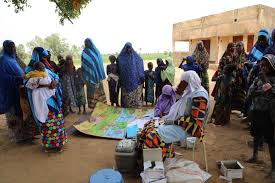
For thousands of residents in remote areas of Adamawa State, access to basic healthcare has long been a struggle, often meaning hours of walking through difficult terrain to reach the nearest facility. This challenge has disproportionately affected women, children, displaced families, and persons living with disabilities, leaving them without routine immunisation, antenatal care, mental health support, and treatment for chronic illnesses.
However, a new mobile outreach initiative is dramatically changing this narrative. Between September and December 2025, the Adamawa State Government, through its Ministry of Health and State Primary Health Care Development Agency, deployed 10 mobile clinics to underserved communities across 10 local government areas. With crucial technical support from the World Health Organization (WHO) and funding from the United Nations Central Emergency Response Fund, this initiative successfully delivered over 410 outreach visits, reaching more than 350,500 people.
The services provided were extensive, encompassing antenatal and postnatal care, routine immunisation, outpatient consultations, nutrition screening, reproductive health services, and disease surveillance. Significantly, the outreach also prioritized mental health support and confidential services for survivors of gender-based violence.
The impact of the initiative is profoundly personal for individuals like Musa Ali, a 22-year-old from Mafiya village in Song Local Government Area. For years, Musa suffered frequent seizures without a diagnosis or treatment, unable to afford the seven-kilometer journey to the nearest health facility. During a mobile clinic visit, health workers diagnosed his epilepsy, initiated treatment, and educated his family on seizure management. “Within weeks, his condition improved significantly,” states the report, noting that Musa regained strength, resumed daily activities, and helped reduce the stigma of epilepsy in his community as others sought help for similar symptoms.
By the close of 2025, the mobile outreach had provided mental health and psychosocial support to over 172,000 individuals. This impressive figure includes more than 3,600 people living with epilepsy, nearly 1,900 battling depression, and hundreds addressing substance use disorders or psychosis. Additionally, 812 survivors of gender-based violence received confidential clinical care and referral services.
Health officials emphasize the effectiveness of the integrated model, which brings together nurses, community health workers, counsellors, mental health focal persons, and GBV officers. This multi-disciplinary approach ensures that “multiple needs are addressed in a single visit, especially in communities reached only intermittently.” The initiative has not only expanded access to care but has also bolstered trust in the health system, leading to improved referrals and continuity of care in these vulnerable communities.
As challenges like insecurity and climate change continue to disrupt traditional healthcare delivery, Adamawa’s mobile clinic model is emerging as “a powerful example of how proactive investment, strategic partnerships and last-mile healthcare delivery can move Nigeria closer to universal health coverage.” For communities that were once cut off from essential services, healthcare is no longer a distant promise; it is now arriving directly at their doorstep.