


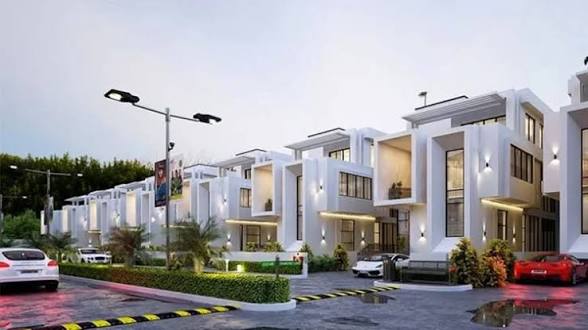
The Lagos State Government has warned that Nigeria’s housing deficit could rise to 28 million units, even as it moves to curb arbitrary rent hikes with a new tenancy bill.
Commissioner for Housing Moruf Akinderu-Fatai said the state is working on monthly and quarterly rent payment options to ease pressure on low-income earners. “We believe that monthly or quarterly payment options will give people more breathing space and reduce the stress associated with sourcing lump sums,” he said during the 2025 Ministerial Press Briefing.
The new bill, titled ‘A Bill for a Law to Regulate the Relationship between Landlords and Tenants in Lagos State’, was presented at the Lagos State House of Assembly. Speaker Mudashiru Obasa said it covers procedures for recovering premises and aims to ensure landlords, tenants, and agents understand their rights and responsibilities.
Obasa urged lawmakers to consider tenants who rely on end-of-year bonuses and leave allowances for rent, while also acknowledging landlords’ dependence on rental income amid rising building costs. The bill sets out payment structures such as monthly and annual rent options, alongside eviction notice protocols.
Lawmaker Sa’ad Olumoh described the legislation as crucial for bringing order to tenancy matters. “The bill promotes harmony by clearly defining rent structures — annual or monthly — and eviction notice procedures,” he said.
Aro Moshood, representing Ikorodu II, called for an enforcement body within the law to check landlords who impose arbitrary rents beyond legal limits. “The bill would relieve tenants and help them plan finances without unnecessary strain,” he said.
According to the Federal Mortgage Bank of Nigeria, the national housing deficit is estimated at over 28 million units and would require more than N21 trillion to close. Lagos alone accounts for over five million of these unmet needs, with more than 70 percent of its 20 million residents living in rented accommodation.
The state government said it had delivered 9,970 home units in the last six years and targets 14,022 by 2027 through public-private partnerships and its rent-to-own scheme. The scheme allows tenants to own homes by paying 5 percent upfront and spreading payments over 10 years.
The bill has been referred to the House Committee on Housing for further review and is expected back in three weeks.