

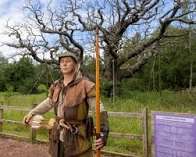
The 1,200-year-old Major Oak in Sherwood Forest, England, reputed to have sheltered the legendary outlaw Robin Hood, is believed to have died after it failed to produce leaves this spring, the Royal Society for the Protection of Birds confirmed.
The ancient oak, estimated to be up to 1,200 years old with a trunk circumference of 11 metres and a canopy spanning 28 metres, had been in visible decline for years. Conservation experts linked the decline to heatwaves, prolonged droughts, and high visitor footfall that heavily impacted the surrounding soil.
Monitoring using dendrometers showed the last significant growth and shrinkage as the tree took on and lost water was in 2024. This spring the huge oak grew no leaves, with no live buds and no sign of imminent leaf burst. The RSPB, which manages the woods in Nottinghamshire, worked with other experts who now agree it appears to have died.
“The tree’s failure to produce leaves this year is heart-breaking for everyone,” said Hollie Drake, senior site manager at RSPB Sherwood Forest. She added, “The Major Oak will continue to stand at the heart of Sherwood as a natural monument for visitors to come and see, living on in the legend of Robin Hood and continuing to provide as much support to the forest’s ecosystem in death as in life”.
Chloe Ryder, the RSPB’s estate operations manager at Sherwood Forest, called it “devastating to accept, but the huge amounts of teaching that the Major Oak has provided won’t be in vain”. She said knowledge gleaned from studying the oak could be used to help protect other ancient trees across the UK.
The pressures on the tree included soil degradation and compaction around the trunk from the footfall of millions of visitors, which made it harder for rainwater to reach the tree’s complex root system. The Woodland Trust, which named the oak its Tree of the Year in 2014, said it had suffered from “excessive tourism”.
Ed Pyne, senior conservation adviser at the Woodland Trust, warned, “Its decline is a warning – the way we treat ancient trees today will shape whether they survive for future generations”. Tree experts found the root system strangled and starved from compacted soil.
For years visitors could walk right up to the tree and even climb into its large hollow trunk, but the surrounding area was fenced off in the 1970s and it has since been viewed at a distance. Acorns and cuttings from the tree have been grown into saplings that have been planted around the world, including at Winfield House, the residence of the US ambassador in London.