


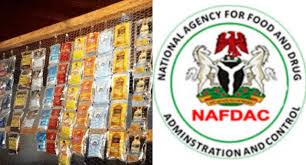
In a unified and decisive move, the Director-General of the National Orientation Agency (NOA), Lanre Issa-Onilu, and the Director-General of the National Agency for Food and Drug Administration and Control (NAFDAC), Mojisola Christianah Adeyeye, have officially launched a nationwide enforcement and awareness campaign to ban sachet alcohol and small-volume alcoholic drinks. The joint campaign, flagged off in collaboration with the Federal Competition and Consumer Protection Commission (FCCPC) in Abuja, signals what officials describe as “a decisive blow against underage drinking and the unchecked spread of cheap, high-strength alcohol in Nigeria.”
Effective January 1, 2026, the Federal Government officially banned the production and sale of alcoholic drinks in sachets and in PET or glass bottles below 200 millilitres, a measure authorities assert is long overdue.
Issa-Onilu declared, “This is not just a policy announcement. This is a line drawn in the sand.” He further elaborated on the gravity of the situation, stating, “For too long, sachet alcohol has been dangerously accessible—cheap, portable, and easy to conceal. When affordability meets vulnerability, the damage is devastating.” He characterized the ban not as a restriction but as a protection, calling it a “deliberate public health intervention designed to shield children and vulnerable populations from early exposure to alcohol.”
The NOA is mobilizing its extensive grassroots network, with 818 offices nationwide and structures in all 774 local government areas, to drive behavioral change. “We will take this message to every community, in every language Nigerians understand,” Issa-Onilu vowed. The agency will also utilize television, radio, digital campaigns, and its CLHEEAN App for citizens to report violations and support enforcement.
Professor Adeyeye presented sobering statistics that underscored the urgency of the ban. Citing a 2021 national survey conducted in collaboration with the Distillers and Blenders Association of Nigeria, she revealed that “54.3% of minors and underaged children obtain alcohol by themselves.” Alarmingly, nearly half of them purchase drinks in sachets and small PET bottles, the very pack sizes now prohibited. In some states, she disclosed, “procurement in sachets and small bottles was as high as 68%.”
The study, which surveyed 1,788 respondents across six geo-political zones, also found that 49.9% of minors access alcohol from friends and relatives, 45.9% obtain it at social gatherings, and 21.7% source it directly from parents’ homes. While “63.2% of minors consume alcohol ‘occasionally’,” a concerning percentage engage in daily consumption and binge drinking, particularly in parts of Gombe, the FCT, and Anambra.
Adeyeye issued a stern warning that underage drinking is not mere experimentation but “a ticking public health time bomb.” She explained that alcohol exposure during adolescence can damage the hippocampus and prefrontal cortex, brain centers crucial for memory, learning, and impulse control. Early drinking, she noted, increases addiction risk by 41% for those who begin before age 15. “It fuels depression, anxiety, risky sexual behaviour, road crashes, domestic instability and declining academic performance,” she stressed. Peer pressure remains the biggest driver, accounting for over 50% of cases, followed by parental influence, social media, and the sheer accessibility of alcohol outlets. “When products undermine health and safety, the government must act,” Adeyeye stated firmly.
The crackdown has robust legislative backing, with the Senate’s November 2025 resolutions urging NAFDAC not to grant further extensions to the moratorium on sachet alcohol, to strictly enforce the ban, and to collaborate with NOA on intensified nationwide sensitization. Adeyeye made it unequivocally clear that “there will be no retreat.” She asserted, “Access to alcohol by children can be drastically reduced when small, concealable pack sizes are eliminated.”
Both agency heads cautioned distributors and retailers that compliance is mandatory. They stressed that consumer protection is public protection, and market responsibility is national responsibility. Parents were urged to remain vigilant, community leaders called upon to champion awareness, and citizens encouraged to refuse patronage of banned products and report violations. “No nation prospers when its youth are trapped in preventable addiction,” Issa-Onilu declared.
The joint campaign highlights an unprecedented alignment of regulation, consumer protection, and national orientation. NAFDAC is responsible for regulation, FCCPC for enforcing market responsibility, and NOA for mobilizing behavioral change. Together, they aim to close the loopholes that allowed sachet alcohol to permeate homes, streets, and school environments. The message from Abuja is clear and uncompromising: The era of cheap, pocket-sized alcohol targeting Nigeria’s youth is over, and “this time, enforcement will not blink.”
Ask anything…