


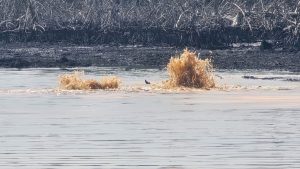
Elem Kalabari, Rivers State – The community of Elem Kalabari in the Degema local government area of Rivers State was confronted with a fresh oil spill last Thursday, a sight that has reopened old wounds for residents already grappling with environmental and economic challenges.
By Sunday morning, a delegation of community members, including women leaders and chiefs, embarked on a fact-finding mission by speedboat to determine the source of the spill. Led by Alabo Eng. Evans Okiye, Chairman of the Elem Kalabari Council of Chiefs, the team discovered crude oil leaking from aging, decades-old pipe heads that are in dire need of maintenance or replacement.
Community leaders have indicated that the leak does not appear to be a result of recent vandalism. They assert that since the ascension of the Amanyanabo of Elem Kalabari, Alhaji Mujahid Asari-Dokubo (Da Amakiri Tubo, Dabaye Amakiri I), illegal oil bunkering activities in the area have significantly reduced due to stricter local enforcement and traditional authority oversight. A resident confirmed, “Amama Soldiers patrol the creeks and waterways of Elem Kalabari round the clock so they notice any illegal activity.”
This latest incident painfully echoes a protest by the women of Elem Kalabari on February 2nd, 2025, who demonstrated for several days demanding environmental remediation, stricter oversight, and genuine engagement with host communities. Their core grievance was that despite oil flowing steadily from their land, the community bears a disproportionate environmental risk without adequate protection or benefit. This new spill reinforces their earlier warnings about the consequences of neglected infrastructure and regulatory oversight.
The environmental and economic impact on this fishing community is severe. Oil slicks contaminate fishing nets, poison marine life habitats, and drastically reduce catch volumes. Women traders, who depend heavily on daily fish supplies, are among the first to suffer economically. Beyond immediate income loss, the long-term environmental costs include degraded mangroves, accelerated shoreline erosion, and compromised water quality, leading to a slow ecological decline that could take decades to reverse.
Growing frustration among community members stems from what they perceive as negligence by operators and the Nigerian state. They argue that routine maintenance of aging infrastructure should be standard practice, not a reactive measure. They insist that preventive oversight is both more cost-effective than cleanup and less destructive than crisis management. For the residents of Elem Kalabari, the frustration is multifaceted: oil wealth leaves their waterways daily, environmental risks persist, infrastructure decays without timely replacement, and regulatory intervention seems slow or distant. This perception of abandonment deepens with every new spill.
Community leaders are now demanding immediate containment and cleanup of the spill, an independent investigation into the integrity of the affected pipe heads, a comprehensive inspection of other aging infrastructure in the area, and transparent reporting of findings to the community.
This incident highlights a recurring issue in the Niger Delta: natural resource extraction without sustained investment in environmental protection leads to instability. The people of Elem Kalabari emphasize that they are not opposed to oil production but demand responsible practices that safeguard their rivers, respect their livelihoods, and acknowledge that development should not permanently compromise host communities. Mrs. George, a resident, lamented, “The resources on our land has become a curse. This is unfair.” Another resident added, “Our people are patient and long suffering. Our resolve is being tested.”
As investigations unfold, it is clear that last Thursday’s events are not isolated but part of a broader narrative of protest, reform, and renewed cultural assertion. Whether this spill becomes another unresolved chapter or a turning point toward accountability now depends on the swift and transparent response of all stakeholders involved.