


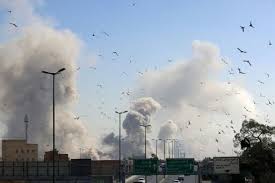
Asian stock markets experienced significant drops on Monday as oil prices surged by 30 percent, driven by anxieties over Middle East supply disruptions. This escalation comes as the US-Israeli war against Iran enters its second week with no indications of abating.
Investors, already on edge due to concerns about extended tech valuations and massive investments in AI, reacted sharply as crude oil prices climbed to their highest levels since the Russian invasion of Ukraine in 2022. Fears are growing that the Middle East conflict could be prolonged following US President Donald Trump’s statement that only the “unconditional surrender” of Iran would bring the war to an end. Trump also remarked over the weekend that the increase in prices was a “small price to pay” to neutralize Iran’s nuclear threat, reiterating the White House’s stance that the price hike is temporary.
Both major oil contracts, which had already seen increases of more than a quarter last week, spiked further after Iran reportedly carried out retaliatory strikes against crude-producing Gulf nations. West Texas Intermediate (WTI), the primary US oil benchmark, soared by as much as 30 percent, reaching a high of $118.88 per barrel. Brent crude also surged, climbing 28 percent to $118.73. Since the conflict began, WTI has seen an increase of over 75 percent, while Brent has risen by more than 60 percent.
Reports emerged of attacks on oilfields in southern Iraq and the northern autonomous Kurdistan region, forcing a US-operated oilfield to cease production. Additionally, the United Arab Emirates and Kuwait have begun reducing their oil output. These developments coincide with the halting of maritime traffic in the Strait of Hormuz, a critical route through which a fifth of global crude and gas passes, since the war commenced on February 28.
The prospect of sustained high energy prices has intensified fears of a fresh wave of inflation, threatening to impact the global economy and potentially hindering central banks from cutting interest rates to stimulate growth. As the global economy faces a blow from this crisis, equity markets continued their downward trend from the previous week. Seoul, which had been the year’s top performer due to a tech rally, tumbled more than eight percent at one point. Tokyo shed seven percent, and Taipei fell over five percent. Hong Kong, Shanghai, Sydney, Singapore, Manila, and Wellington also registered sharp declines.
Futures for all three main indexes on Wall Street were down by more than two percent, and the dollar strengthened against other currencies as traders sought its safe-haven status. Stephen Innes of SPI Asset Management commented on the situation, stating, “The deeper shock is spreading across the production chain.” He added, “Gulf producers are scaling back output because storage hubs are filling up and export flows are seizing. Qatar has halted liquefaction at key gas facilities, a move that will take weeks to reverse even if the conflict cools tomorrow.” Innes further clarified, “In other words, the market is not dealing with a headline shock. It deals with a physical disruption of oil molecules.” He concluded, “Oil above $100 is not just a commodity rally. It becomes a tax on the global economy.”
Despite these alarming developments, President Trump attempted to reassure the public that the surge in crude prices would be short-lived. He wrote on social media Sunday evening Washington time, “Short term oil prices, which will drop rapidly when the destruction of the Iran nuclear threat is over, is a very small price to pay for U.S.A. and World, Safety and Peace.”