

The Nigerian Bar Association has rejected a directive from a military tribunal ordering civilian lawyers to appear fully robed in wigs and gowns during a secret coup trial in Abuja, describing the requirement as lacking any legal basis and contrary to the rules governing the legal profession.
The directive was contained in Item 9 (g) of the Convening Order for the General Court Martial convened to try 36 military officers accused of plotting to overthrow President Bola Tinubu. The order states: “All officers are to wear No 4 dress (or equivalent) while soldiers are to wear No 5 dress (or equivalent) throughout the duration of the court. All civil lawyers are to be robed. However, serving officers who are lawyers have the option of either wearing No 4 (or equivalent) or being robed.”
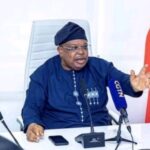
Senior Advocate of Nigeria Femi Falana condemned the dress code, warning that defence counsel and military prosecutors who wear legal robes before the General Court Martial risk being dragged before the Legal Practitioners Disciplinary Committee for professional misconduct. He said the military’s directive is “completely at variance” with the Rules of Professional Conduct for Legal Practitioners 2023.
Falana cited Rule 45(2) of the Rules of Professional Conduct, which states: “A lawyer shall not wear the Barrister’s or Senior Advocate’s robe (a) on any occasion other than in Court except as may be directed or permitted by the Bar Council.” He added: “Defence counsel and military prosecutors who may be robed before the General Court Martial stand the risk of being dragged before the Legal Practitioners Disciplinary Committee for professional misconduct.”
The senior advocate urged the military authorities to withdraw the robing requirement from the Convening Order, stating: “In view of the fact that the directive is completely at variance with the Rules of Professional Conduct for Legal Practitioners 2023, the military authorities should jettison it.”
Legal analysts note that lawyers by custom do not robe before a tribunal, as such courtesy is reserved only for the superior courts of record. It is also regarded as a breach of the custom of the bar for a lawyer to robe before a judge, magistrate or adjudicator that is not himself robed. The Armed Forces Act and the Rules of Professional Conduct do not authorize the Chief of Army Staff or any other convening officer to prescribe the dress code for civilian lawyers appearing before a Court Martial.
The NBA’s rejection follows similar criticism in 2016 when the then Chief of Army Staff, Tukur Buratai, issued a convening order directing all civil lawyers appearing before Courts Martial to be fully robed in wigs and gowns. That order was described as “utterly ultra vires his powers” and “not only baseless in law but offensive to subsisting legislations and General Custom of the bar.”
Civilian defence counsel now face a conflict between the military order and professional rules. Falana said the decision places lawyers in a position where appearing robed would violate Rule 45(2) and could result in LPDC proceedings, while refusing to robe would breach the military’s Convening Order.
A graphic published by Sahara Reporters on May 13, 2026, highlighted the NBA’s stance, stating the association rejected the tribunal’s order for civilian lawyers to wear traditional wigs and gowns during the coup trial in Abuja. The report framed the dispute as part of broader concerns about due process, the encroachment of military authority on civilian legal practice, and the independence of the legal profession in Nigeria.
As of now, the NBA has not issued formal guidance to members on how to navigate the conflict, leaving individual practitioners to decide whether to comply with the military directive or adhere to the Rules of Professional Conduct.