


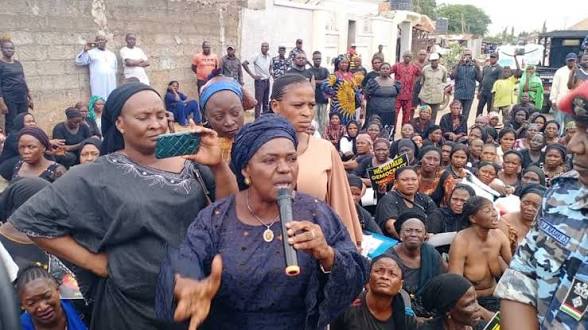
Women from the Elugwu Akwu community in Oji River Local Government Area of Enugu State took to the streets on Tuesday, June 16, 2026, in a peaceful protest demanding an end to commercial sex work and the use of crystal methamphetamine known locally as Nkpuru Mmiri or New Heaven.
Carrying placards that read “End Ashawo”, “End New Heaven” and “Ashawo must go”, the demonstrators marched along roads near Oji River. They chanted and voiced frustration over what they described as sex workers taking over their husbands and sons, leading to broken homes, neglect, and moral decline. One of the inscriptions seen during the protest read: “Ashawo must go. End ashawo in Elugwu Akwu”.
The women accused the sex workers of luring married men and young boys into immoral activities.
Speaking during the protest, some of the women lamented that many married men in the community now spend more time and money patronizing sex workers than caring for their families. “Our husbands have abandoned us,” some protesters said, complaining that their husbands were no longer showing them affection because of the increasing influence of “Ashawos” in the area.
Beyond concerns about marriages, the protesters expressed fears that teenage boys and young men in the community were being drawn into unhealthy lifestyles.
According to them, the growing visibility of commercial sex activities could have long-term social consequences if left unchecked.
One of the protest leaders said the demonstration was necessary to draw attention from authorities and community leaders, insisting that urgent action must be taken to restore what they described as “decency and order” in their environment.
The women called on community leaders, traditional authorities, and relevant government agencies to intervene before the situation worsens.
Videos and images of the protest quickly circulated across social media platforms, sparking mixed reactions online.
While some users supported the women’s stance and argued that communities have the right to protect their social values, others questioned the approach and urged a deeper conversation about economic hardship and the factors that push individuals into such activities.
The protest comes amid ongoing socioeconomic difficulties across southeastern Nigeria, including high youth unemployment, rising inflation, and the spread of hard drugs which have troubled the region for years.