

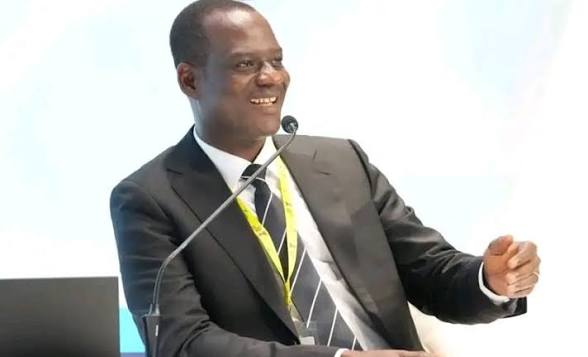
A former Federal Commissioner of the Code of Conduct Bureau has called on Nigerian journalists to embark on rigorous fact-finding over allegations of N34 trillion in public funds said to be missing or unaccounted for in government accounts.
Speaking on the controversy surrounding deductions from the Federation Account and rising public distrust in government fiscal management, the ex-CCB commissioner said the media must go beyond viral figures and establish the facts. “Journalists have a duty to dig deeper. When figures like N34.5 trillion are thrown into the public space without context, they become viral ammunition, stripped of meaning and weaponised in public discourse,” he said.
The call comes amid ongoing debates over first-line deductions from federal allocations, which some analysts say total N34.5 trillion between February 2024 and August 2025. Defenders of the current system argue that many of these deductions are unavoidable, noting that debt must be serviced, agencies must be funded, and oil sector obligations must be met.
But the former commissioner warned that necessity does not justify opacity. “In well-functioning fiscal systems, even complex pre-allocations are subject to rigorous disclosure, audit, and legislative oversight. Nigeria should demand no less,” he said. “The political consequences are already evident. In the absence of clear, accessible explanations, legitimate fiscal mechanisms are easily recast as corruption scandals.”
He said the cycle of mistrust, misinformation, and institutional decay will persist unless journalists verify claims and demand transparency. “Breaking that cycle requires more than rebuttals and technical clarifications. It requires structural reform,” he stated.
He urged the government to publish detailed, periodic breakdowns of all first-line deductions, including legal justifications, recipient entities, and audited outcomes. “These should be subject to independent verification and legislative review. Anything less perpetuates a system where transparency is optional and accountability is diluted,” he added.
“Nigeria does not have a revenue problem as much as it has a visibility problem. Money is being spent — but not in a way the public can clearly see, understand, or evaluate,” the ex-CCB commissioner said. “Until that changes, the question will persist — not because trillions are missing, but because they are hidden in plain sight.”
The remarks follow separate but related concerns raised by the Socio-Economic Rights and Accountability Project, which has sued the Central Bank of Nigeria over the alleged failure to account for and explain the whereabouts of N3 trillion of public funds, including over N629 billion paid to ‘unknown beneficiaries’ as part of the Anchor Borrowers’ Programme, according to the Auditor-General’s 2022 report published on September 9, 2025.
SERAP, in suit number FHC/ABJ/CS/250/2026 filed at the Federal High Court in Abuja, is seeking “an order of mandamus to direct and compel the CBN to account for and explain the whereabouts of the missing or diverted N3 trillion of public funds, including detailed reports of how exactly the funds were spent.”
“These grim allegations by the Auditor-General suggest grave violations of the public trust, the provisions of the Nigerian Constitution 1999, the CBN Act, and anticorruption standards,” SERAP Deputy Director Kolawole Oluwadare said.
The ex-CCB commissioner said journalists must interrogate such allegations with documents, not just headlines. “Ask for the FAAC breakdowns. Demand the audit trails. Interview the agencies. Until the media leads this fact-finding revolution, Nigerians will continue to equate deductions with diversion,” he said.
He added that public trust is currency in governance. “Once lost, it is difficult to recover. The press must help rebuild it with facts, not speculation.”
As of the time of filing this report, the Federal Ministry of Finance, Budget and National Planning had not issued a detailed response to the N34 trillion claims.