

Nigeria’s foreign reserves have crossed the $50 billion mark for the first time in 13 years, with net reserves now at $34 billion, ten times what the government inherited in 2023, the Presidency said on Thursday.
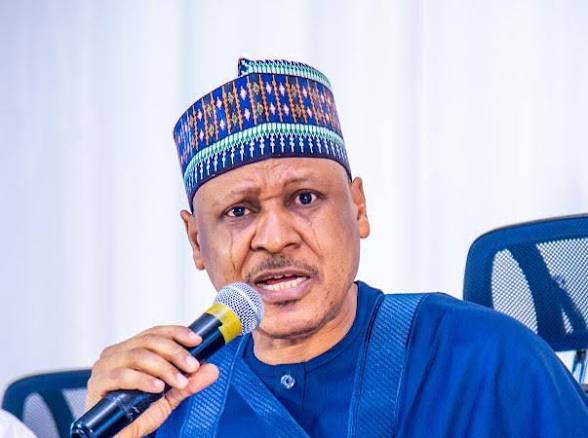
The Minister of Information and National Orientation, Mohammed Idris, disclosed the figures while receiving the Minister of Industry, Trade and Investment, Dr. Jumoke Oduwole, in Abuja. “For the first time in 13 years, Nigeria’s foreign reserves have crossed the 50-billion-dollar mark,” the minister said. He added that the rebound is one of several indicators that the economic reforms introduced by President Bola Ahmed Tinubu’s administration are beginning to yield measurable results.
The minister said Nigeria’s recent removal from the Financial Action Task Force grey list also sends a positive signal to international investors about the country’s improving financial credibility and readiness for legitimate business.
The development follows earlier disclosures by the Presidency on the state of the economy. President Bola Tinubu said in his Independence Day broadcast that Nigeria’s external reserves increased to $42.03 billion in September, the highest since 2019. “We have a stronger foreign Reserve position than three years ago. Our external reserves increased to $42.03 billion this September — the highest since 2019,” Tinubu said.
Tinubu stated that when he took over on May 29, 2023, the reserve was $32 billion, with most of it encumbered. “We inherited a reserve of over $33 billion 16 months ago. Since then, we have paid back the inherited forex backlog of $7 billion. We have cleared the ways and means debt of over N30 trillion. We have reduced the debt service ratio from 97 per cent to 68 per cent. Despite all these, we have managed to keep our foreign reserve at $37 billion. We continue to meet all our obligations and pay our bills,” the President explained in a previous national broadcast.
Bayo Onanuga, Special Adviser to the President on Information and Strategy, writing on his X handle, cited Central Bank of Nigeria data showing Nigeria’s FOREX reserves rose from $37.195 billion on July 1, 2025, to $40.159 billion on August 7. According to Onanuga, “When President Tinubu took over on 29 May 2023, the reserve was $32 billion, with most of it encumbered. Surely, the management of the economy is in good hands, as positive indicators abound in other sectors.”
Senior Special Assistant to the President on Digital Strategy Engagement and Communications, O’tega Ogra, noted that net external reserves have seen a massive 482.5 percent increase, from $4 billion to $23.3 billion. “Despite these repayments, Nigeria’s gross external reserves have grown to approximately $40.9 billion, up from $33 billion in 2023,” he said.
The administration said the gains reflect disciplined monetary policy and fiscal reforms. Tinubu listed other achievements, saying the government has restored fiscal health by significantly reducing the debt service-to-revenue ratio from 97 percent to below 50 percent. “We have paid down the infamous Ways and Means advances that threatened our economic stability and triggered inflation,” he said.
Following the removal of the petroleum subsidy, the President said trillions of naira have been freed up for targeted investment in the real economy and social programmes. “We have freed up trillions of Naira for targeted investment in the real economy and social programmes for the most vulnerable, as well as all tiers of government,” Tinubu stated.
The President also pointed to trade and revenue milestones. “Nigeria’s trade surplus increased by 44.3 percent in Q2 2025 to N7.46 trillion, the largest in about three years. Goods manufactured in Nigeria and exported jumped by 173 percent. Non-oil exports, as a component of our export trade, now represent 48 per cent, compared to oil exports, which account for 52 per cent,” he said.
He added that the tax-to-GDP ratio has risen to 13.5 per cent from less than 10 per cent and is expected to increase further when the new tax law takes effect in January. “The tax law is not about increasing the burden on existing taxpayers but about expanding the base to build the Nigeria we deserve and providing tax relief to low-income earners,” Tinubu said.
Other listed achievements include oil production exceeding the OPEC quota for three consecutive months at an average of 1.71 million barrels per day, oil theft dropping to less than 10,000 barrels per day, and the country becoming a net exporter with a trade surplus for five consecutive quarters. “We are now selling more to the world than we are buying, a fundamental shift that strengthens our currency and creates jobs at home,” the President said.
Under the social investment programme, N330 billion has been disbursed to eight million households, many of whom have received one or two tranches of N25,000 each, the President revealed.
The Presidency said the reforms, though painful, were necessary. “Economic reform is never painless,” O’tega Ogra said. “Every action that has faced deep distortions has faced the same choice: take the hard medicine early, or delay and pay much more later.”
A Yoruba leader, Oladotun, commended the President’s efforts. “It is quite challenging considering the economic woes the president inherited from previous successful administrations, particularly that of the immediate past President Muhammadu Buhari, who handed over a destabilised economy. We must commend Mr. President for fixing the economy within six months with $37 billion reserved and having paid for all ways and means. It makes us salute President Tinubu’s maverick vision,” he said.
The Minister of Information said his ministry remains committed to amplifying government policies and programmes, particularly those designed to strengthen the nation’s economic environment and attract both local and foreign investment. “The Federal Ministry of Information and National Orientation is always about servicing you, amplifying the work that you do, and ensuring that we ventilate some of those programmes and policies so that Nigerians and people outside Nigeria will really understand what it is that you do,” Idris said.