


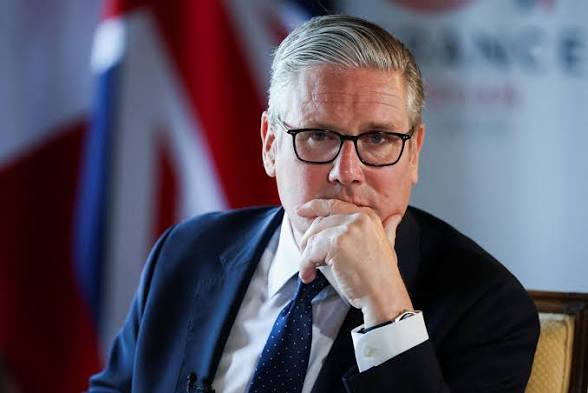
LONDON — United Kingdom Prime Minister and Labour Party leader Keir Starmer on Monday announced his resignation, bowing to mounting pressure from within his party after months of political turmoil, electoral setbacks and growing dissent over his leadership.
Starmer said he would remain in office until a successor is elected, a move aimed at ensuring a smooth and orderly transition of power.
Speaking outside 10 Downing Street shortly after 9:30 a.m. London time, an emotional Starmer described becoming prime minister as the “proudest moment of my life.”
“Entering Downing Street was the proudest moment of my life,” he said, adding that his government had worked to restore Britain’s international standing, attract investment and strengthen workers’ rights.
The outgoing prime minister, however, acknowledged that confidence in his leadership had waned within Labour’s parliamentary ranks.
“I have heard the answer from my parliamentary party,” Starmer said. “I accept that answer with good grace. I will resign as leader of the Labour Party.”
His resignation comes less than two years after he led Labour to a landslide victory in the 2024 general election, securing one of the party’s largest parliamentary majorities in recent history.
The decision follows Labour’s disappointing performance in May’s local elections, where the party suffered significant losses, triggering an increasingly vocal rebellion among lawmakers concerned about the government’s direction and electoral prospects.
Political tensions intensified after former Greater Manchester Mayor Andy Burnham secured a convincing victory in a special election on June 18, fuelling speculation about a potential leadership challenge and positioning him as a leading contender to succeed Starmer.
Starmer and Chancellor Rachel Reeves have faced persistent criticism from Labour members over the government’s fiscal policies, while controversial welfare reforms further deepened divisions within the party.
The appointment of Peter Mandelson as Britain’s ambassador to the United States also generated backlash among some Labour figures, worsening internal tensions.
Public confidence in the prime minister had also deteriorated. An Ipsos poll published on Friday found that 52 per cent of Britons believed Starmer should step down, up five percentage points from May, while only 35 per cent wanted him to remain in office.
Financial markets reacted cautiously to the political developments. The British pound weakened slightly against the U.S. dollar, while government bond yields remained largely unchanged in early trading after initial volatility sparked by Burnham’s recent electoral success.
Starmer’s departure opens a fresh chapter for Labour as the party prepares for a leadership contest that will determine not only its future direction but also the next occupant of Downing Street.