

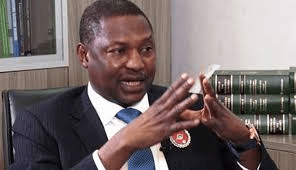
Abuja – The Economic and Financial Crimes Commission (EFCC) has confiscated the international passport of former Attorney‑General of the Federation and Minister of Justice, Abubakar Malami, SAN, as part of a widening investigation into the $490 million Abacha loot recovered under a Mutual Legal Assistance Treaty (MLAT). A senior EFCC officer said the seizure was necessary because “there are serious gaps in the handling and whereabouts of the $490 million” and that Malami “has many issues to clarify” regarding the repatriated funds.
Malami was questioned late into Friday night and released around 1:00 a.m. on Saturday under bail conditions described by insiders as “the toughest ever issued to a former AGF.” Among the restrictions, he must report to the EFCC headquarters in Abuja every day for the next month and is barred from leaving Nigeria unless granted permission by the EFCC or a High Court. “The former minister may not travel out of the country except with mutual agreement with the EFCC or a High Court order,” the officer added.
The anti‑graft agency emphasized that the move does not imply guilt. “We didn’t say he stole the money. But he must account for it,” the officer told reporters. Investigators say the former law officer must explain the flow of the MLAT‑recovered funds, a transaction now under intense scrutiny.
In a post on X, Malami dismissed the allegations as fabricated and thanked Allah for divine intervention. He wrote, “In line with my undertaking to keep Nigerians updated on my invitation by EFCC, I give glory to Allah for His divine intervention. The engagement was successful, and I am eventually released while on an appointment for further engagement as the truth relating to the fabricated allegations unfolds.” He added that the truth would soon emerge and that his interaction with the EFCC had been “successful.”
The EFCC said it would release its findings after a thorough investigation and warned that the travel ban would remain in force until the probe is concluded. The case has sent shockwaves through Nigeria’s political and legal circles, marking a dramatic turn for a former chief law officer once regarded as untouchable.