

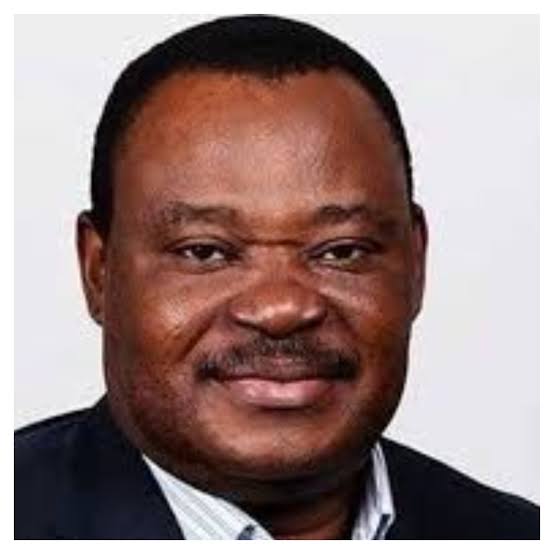
Senator Jimoh Ibrahim, representing Ondo South, has said that the economic reforms introduced by President Bola Ahmed Tinubu are irreversible and will position Nigeria for long-term prosperity, insisting that the country is already seeing signs of disciplined fiscal management.
Ibrahim, an ambassador-designate, made the remarks while reacting to ongoing debates over Nigeria’s debt profile and borrowing pattern. “Those who expected reckless borrowing have been proven wrong,” he said. “Nigeria is not on the list of the world’s most indebted countries. This reflects deliberate fiscal coordination and structured economic reforms.”
The lawmaker, who frequently speaks on economic policy and debt management, noted that contrary to earlier projections by critics, the Tinubu administration has not embarked on excessive borrowing. According to him, global economic data show that several advanced and emerging economies currently top the list of the world’s most indebted countries in terms of debt-to-GDP ratio, while Nigeria does not fall within that bracket.
“Nigeria’s absence from the list of the world’s most indebted countries reflects disciplined fiscal coordination under President Bola Tinubu,” Ibrahim said in a statement shared with reporters on Wednesday. He argued that while Nigeria continues to access credit facilities for infrastructure and development projects, such borrowings are being undertaken within manageable thresholds and aligned with revenue reforms.
Ibrahim maintained that the administration’s reform-driven policies, including subsidy removal and exchange rate unification, were designed to stabilise public finances and reduce long-term fiscal vulnerabilities. He described the development as a sign that what supporters call “Bolaeconometrics,” a phrase used to reference President Tinubu’s economic recalibration, is beginning to yield measurable results.
The Senator had earlier spoken at the Parliamentary Engagement on the sidelines of the International Monetary Fund and World Bank Annual Meetings in Washington D.C., where he urged multilateral institutions to acknowledge that the Nigerian economy has turned the corner due to the reforms. “President Bola Tinubu will not compromise Nigeria’s sovereignty in the face of economic outlook,” he said. He advised the institutions to stop downplaying reforms in one of Africa’s biggest economies.
While acknowledging that the reforms have imposed short-term hardship, Ibrahim insisted the measures are necessary to build a Nigeria where prosperity is shared, sustainable, and inclusive. “The reforms I have outlined, though challenging in the short term, are necessary to build a Nigeria where prosperity is shared, sustainable, and inclusive,” he said.
Ibrahim added that external reserves have climbed toward 38 billion dollars and debt-service-to-revenue has fallen from over 90 percent to about 65 percent, describing the trend as evidence that macro stability is being restored. He warned, however, that the benefits must be made visible to citizens to avoid reform fatigue.
“Reform succeeds not when people stop complaining, but when they start believing again,” he said. “Safeguarding the real benefits of Tinubu’s reforms demands more than fiscal discipline; it requires visible honesty. When Nigerians see transparency at work, even hard reforms will feel like progress.”