

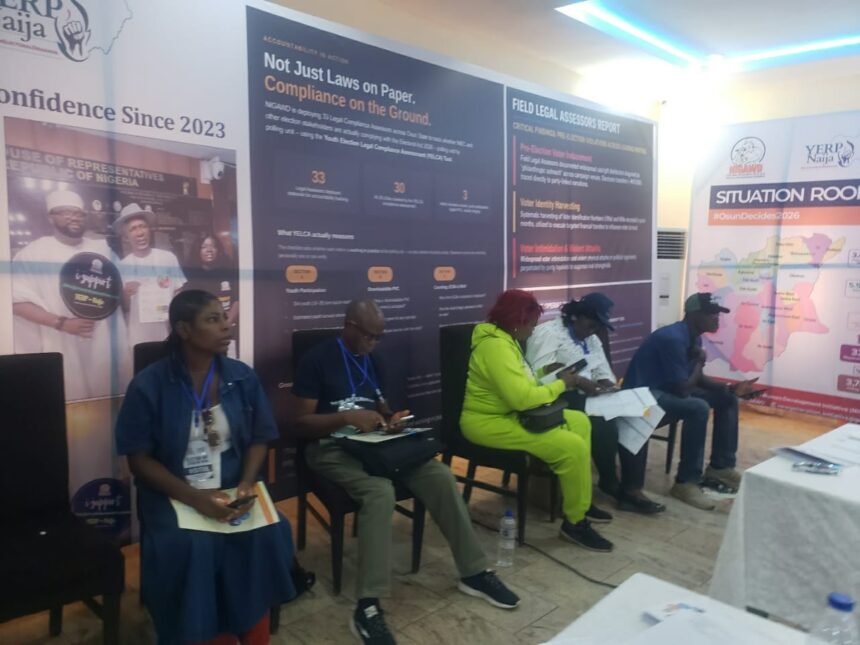
OSOGBO — Civil society groups observing the August 15, 2026 Osun governorship election have begun evaluating how well electoral guidelines and reforms are being applied, with attention on downloadable PVCs, electronic transmission of results, vote inducement, secrecy of ballots, and the role of young voters.
The exercise is being coordinated by the YERP-NAIJA Consortium. According to the groups, the goal is to test whether lessons and recommendations from past elections have led to visible improvements in how the poll is conducted.
Abimbola Aladejare-Salako, Executive Director of The New Generation Girls and Women Development Initiative (NIGAWD) the Southwest lead for YERP Naija Consortium, said prior to voting, the coalition met with the Independent National Electoral Commission, including the Resident Electoral Commissioner, and other stakeholders.
She explained that the meetings focused on ensuring that key sections of the Electoral Act and INEC guidelines were applied, especially around accreditation, transparency, and the electronic transfer of results.
Field observers noted that in some polling units and local government areas, voters were using downloadable PVCs. The teams are checking whether those presenting the digital version are allowed to vote, and they clarified that an authentic downloadable PVC must not be mistaken for a photocopy of a physical card or any other ID.
The next stage of monitoring will look at vote counting and result handling. Observers will verify if the right result forms are filled out and pasted at polling units, and whether result images are uploaded to INEC’s official portal. Instances where uploads fail will also be recorded, with details on what caused the problem.
The groups stressed that result transmission is a critical point.
“Anything can happen between that point of voting and the collation centre,” Salako said, adding that monitoring must cover the entire chain from voting to collation.
Legal monitors on the field also documented allegations of cash and gift sharing disguised as charity at campaign locations. They further flagged reports of electronic transfers of ₦10,000 allegedly tied to political parties, noting that these claims will be verified further.
The coalition said it is tracking vote buying, voter inducement, and breaches of ballot secrecy, warning that such actions threaten the credibility and integrity of the election.
On youth involvement, Aladejare-Salako said the assessment will measure how many young people came out to vote and whether reforms meant to benefit young voters are being put into practice.
The monitoring covers three phases: pre-election engagements, election-day observation, and post-election review.
The effort stems from the Vote Not Buy campaign, which mobilised young people in the Southwest to take part in elections and reject vote buying. That campaign later helped form the YERP-NAIJA Consortium, which has pushed for reforms addressing young Nigerians’ concerns.
As part of that work, the consortium said it has engaged lawmakers and submitted proposals for new electoral laws.
The focus has now shifted from pushing for reforms to checking if reforms already in the Electoral Act are working on the ground. Several observer teams have been trained and deployed across Osun for this purpose.
The groups are also building the assessment into a knowledge hub that will help CSOs track whether past recommendations are producing real change. The current work is being run as a pilot, with field reports turned into scores to measure reform implementation.
They also raised concerns about election technology and data management, saying problems from previous polls should inform improvements now.
The organisations clarified that their role is not to take over INEC’s duties, but to provide independent oversight, spot gaps in implementation, and record where reforms are working or falling short.
They added that no interim scores will be published while voting is ongoing. A full report with verified observer data will be released after the process ends, and will be shared with the media and other stakeholders.
The coalition reiterated that its aim is to strengthen transparency, credibility and accountability in elections, and to keep young Nigerians’ voices and interests at the center of electoral reform.