

Washington – In a rare display of bipartisan unity, the United States Congress voted overwhelmingly on Monday to give President Donald J. Trump authority to deploy targeted military force against armed groups accused of wading a campaign of violence against Christian communities in northern and central Nigeria. The resolution, passed in a special joint session with 285 votes in favour and 98 against, received backing from 232 Republicans and 53 Democrats, a striking convergence of party lines.
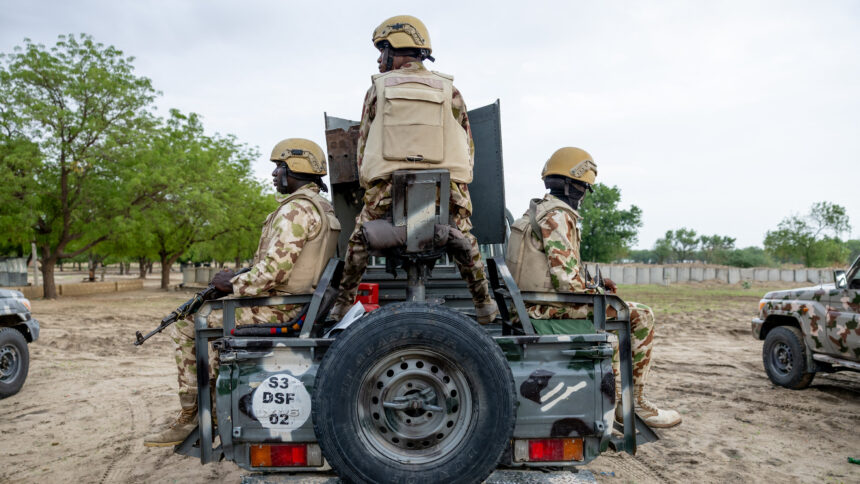
The measure, known as the Nigeria Religious Freedom Protection and Counter‑Terrorism Act of 2025, was fast‑tracked after three weeks of classified briefings. It empowers the president to conduct precision strikes and special‑forces operations against jihadist organizations such as Boko Haram and heavily armed Fulani militia elements that have carried out lethal raids across the Middle Belt and northern states for more than a decade.
President Trump, who has repeatedly described the attacks as “nothing short of genocide against Christians,” celebrated the vote on Truth Social, writing: “HUGE WIN! Congress just voted 285–98 to let us STOP the slaughter of innocent Christians in Nigeria. The military is ready. Very soon, justice will be done – fast and hard. Thank you to every Patriot who stood with us!”
The resolution cites monitoring groups, including Open Doors, which rank Nigeria among the world’s most dangerous places for Christians, with thousands killed each year. It also notes steps already taken by the administration: on October 31, Trump designated Nigeria a “Country of Particular Concern” for severe violations of religious freedom, froze more than $1 billion in U.S. aid pending tangible security improvements, and ordered the Pentagon to draw up contingency plans for “rapid and decisive” military action.
The Nigerian government in Abuja denounced the congressional vote as an excessive intrusion, insisting that the security crisis affects citizens of all faiths and remains a domestic matter. In contrast, evangelical leaders and human‑rights advocates in the United States hailed the decision as long overdue. Several African and European governments expressed concern that unilateral U.S. military intervention could destabilize the wider West African region.
Under the U.S. constitutional process, President Trump now has ten days to sign the resolution into law. If signed, U.S. military operations could begin immediately, with analysts predicting precision airstrikes and possible special‑forces missions rather than a large‑scale ground deployment. For many persecuted Christians in Nigeria, the vote offers a rare moment of hope, while for the White House it underscores Trump’s pledge that the United States will no longer stand silent when Christians face violent persecution anywhere in the world.