

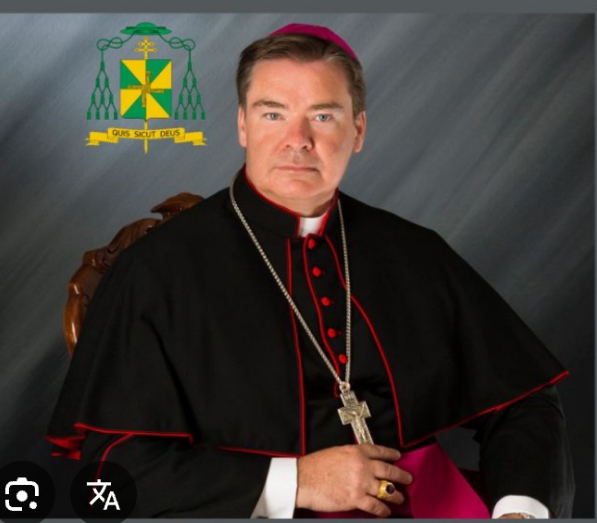
ABUJA – The Pope’s representative to Nigeria has urged the Federal Government to act decisively to end what he described as the unabated killing of Christians in Plateau, Kaduna and Niger states, saying authorities must ensure the safety and protection of every citizen.
Pope Leo XIV, speaking after the Sunday Angelus, said he received reports of recent attacks against various communities in Nigeria “with sorrow and concern” and expressed “prayerful closeness to all the victims of violence and terrorism”. “I likewise hope that the competent Authorities will continue to work with determination to ensure the safety and protection of the life of every citizen,” the Pope said.
The Pontiff specifically flagged Nigeria among nations where Christians face escalating violence, discrimination and persecution. “In various parts of the world, Christians suffer discrimination and persecution. I think especially of Bangladesh, Nigeria, Mozambique, Sudan, and other countries from which we frequently hear of attacks on communities and places of worship,” he stated on his official X account. He called for united global action to promote peace and prayed that “all violence may cease and that believers may work together for the common good”.
The Pope’s concern follows a spate of deadly incidents. On the evening of February 3, at least 160 people were killed in the village of Woro, in the country’s central-west region. At least 51 people have also been abducted and six killed over three days during attacks on four different villages in Kaduna State, according to Nigerian security sources cited by AFP. The attacks took place in the southern part of Kaduna State, a predominantly Christian area, where more than 180 people were abducted in January before being released in recent days.
On November 16, 2025, Pope Leo XIV issued what was described as a rare and urgent warning, naming Nigeria among the world’s most dangerous countries for worshippers. Reports indicate that 3,100 Christians were killed and 2,830 abducted in Nigeria in 2024 alone, the highest global toll. Civil-society estimates for 2025 place fatalities above 7,000 and abductions at 7,800 between January and August. The violence, concentrated in Plateau, Kaduna, Benue, and other central states, has left communities fractured, villages emptied, and churches desecrated, with roughly 100 attacked monthly.
Analysts attribute the attacks to a complex nexus of Fulani militants, jihadist factions, and armed criminal networks, driven by a combination of religious hostility, ethnic tension, and competition over land and resources. While the causes are multifaceted, the human toll falls disproportionately on Christian communities.
Responding to a question about the safety of Nigerian Christians, Pope Leo XIV noted that “in Nigeria, in certain areas, there is certainly a danger for Christians, but for all people. Christians and Muslims have been slaughtered”.
The Pope’s alarm came against the backdrop of the United States declaration of Nigeria as a country of particular concern, in view of allegations of Christian genocide in the country. US President Donald Trump had warned of serious diplomatic and military consequences if the violence was not stopped, and directed the U.S. Department of War to prepare for possible action. He stressed that any intervention would be “fast, vicious, and sweet”.
The Nigerian Church has commended Pope Leo XIV for his prompt message condemning the violence and praying for victims, particularly after the massacre in Benue State where approximately 200 people, mostly internally displaced persons sheltering at a local Catholic mission, were killed in a midnight attack between June 13 and 14. Church authorities have, however, sharply criticised the silence and inaction of Nigerian authorities. “The question now is not just ‘Who are the killers?’ but ‘Why is the government refusing to name and confront them?’ Is it fear of losing political capital? Is it complicity? Is ethnic solidarity outweighing constitutional duty?” an editorial for the Nigerian Catholic Network stated.
Back home, President Bola Tinubu has deployed a peace emissary, Dr Abiodun Essiet, to Plateau State to calm tensions and rebuild trust among warring communities. Essiet met with religious leaders, Fulani community heads, youth groups, and Christian clerics during her visit. According to a statement by presidential aide Bayo Onanuga, the President remains committed to promoting peaceful coexistence and strengthening grassroots dialogue structures across the North Central region.
The Pope reiterated that “God is a merciful Father who desires peace among all His children” and said he accompanies in prayer the families affected by the killings. “Let us pray that all violence may cease and that believers may work together for the common good,” he added.