

The Federal Government has acknowledged that the cost of living remains too high for many Nigerians and has signalled plans to review the national minimum wage, saying the current N70,000 benchmark no longer reflects prevailing economic realities.
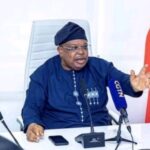
Chief of Staff to the President, Femi Gbajabiamila, disclosed this on Thursday at the Good Governance Summit 2026 organised by Working People United in Abuja. He said the administration recognises that workers deserve wages that keep pace with economic conditions.
“The cost of living remains too high for too many of our people. The N70,000 wage, which was a milestone in 2024, must be honestly reassessed against today’s realities,” Gbajabiamila said. “I can confirm to you that when the time comes to begin the process of reviewing the national minimum wage, this administration will approach that endeavour not as an adversary of labour, but as a partner,” he stated.
President Bola Tinubu signed the N70,000 minimum wage into law in July 2024, more than doubling the previous N30,000 and reducing the review cycle from five years to three years to allow wages to keep closer pace with economic reality. Gbajabiamila said the move was deliberate to ensure wages do not stand still. “In July 2024 President Bola Tinubu signed into law a minimum wage of N70,000 naira, with more than double the N30,000 naira that workers had endured for years and recognising that the cost of living does not stand still, the President reduced the strategic review cycle from five years to three years,” he said.
Labour unions have been pushing for an earlier review, citing sharp increases in food, transport, housing, and healthcare costs. The Nigeria Labour Congress and Trade Union Congress said they will commence negotiations by July 2026 to avoid the delays that marred past reviews. “The current Act expires early next year, and we have announced that renegotiation will commence by July 2026 to avoid the painful delays of the past,” the unions said.
Minister of Labour and Employment, Muhammad Dingyadi, said the impact of government policies on workers remains the true measure of governance. He added that policies must translate into improved living standards, productivity, social protection and economic opportunities for citizens.