

By Sani Umar
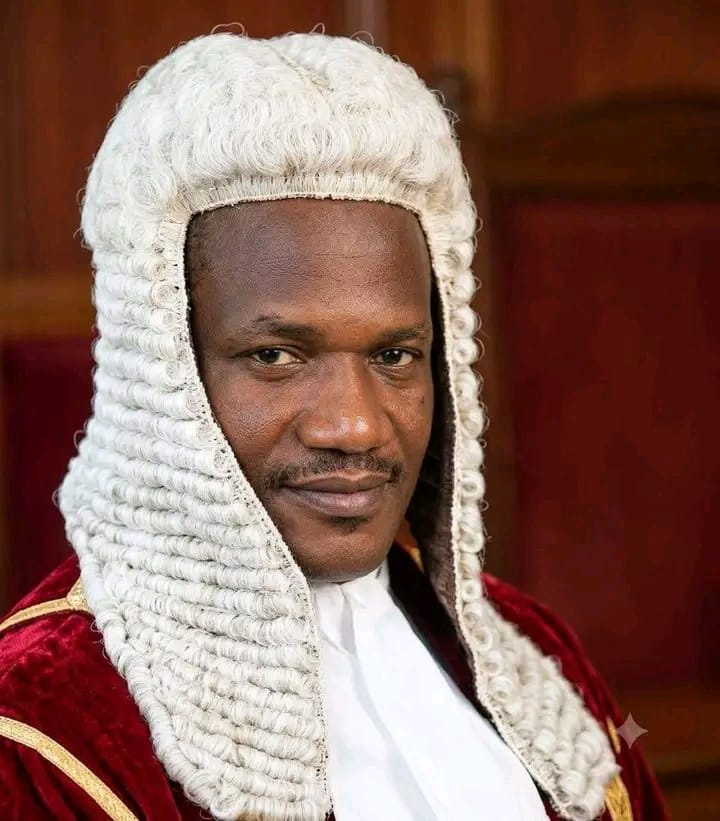
The death of Justice Umaru Atu Kalgo, former Justice of the Supreme Court of Nigeria, marks the end of an extraordinary chapter in the history of Nigeria’s judiciary. He was not merely a judicial officer who rose through the ranks; he was a jurist whose professional life was defined by intellectual depth, discipline, integrity and an uncommon commitment to the administration of justice.
Justice Kalgo, who died at the age of 89, was born on May 12, 1937, in Kalgo, in present-day Kebbi State. His early education took him through schools in Kalgo, Sokoto and Birnin Kebbi before he proceeded to Government College, Zaria. His pursuit of knowledge eventually led him to legal studies at the Institute of Administration, Ahmadu Bello University, Zaria, and subsequently to the United Kingdom, where he undertook further legal training. He was called to the English Bar before returning to Nigeria, where he was enrolled as a barrister and solicitor of the Supreme Court of Nigeria in 1965.
His legal career began in the public service, where he worked as a State Counsel and later rose to become a senior legal officer and Deputy Solicitor-General in the Ministry of Justice of the then North-Western State. It was the beginning of a career that would eventually place him among the most distinguished judicial figures produced by Northern Nigeria and, indeed, by the country.
In 1974, Justice Kalgo was appointed a Judge of the High Courts of Kano and the North-Western States. He subsequently served on the Sokoto State High Court and, in January 1981, became Chief Judge of Sokoto State. His appointment to that position came at a time when the Nigerian judiciary was undergoing important institutional developments, requiring judges who combined legal competence with courage, maturity and a deep understanding of society.
In 1988, he was elevated to the Court of Appeal. He served at the Lagos Division and later became Presiding Justice of the Abuja Division. A decade later, in 1998, he reached the pinnacle of his judicial career when he was appointed a Justice of the Supreme Court of Nigeria.
At the Supreme Court, Justice Kalgo became part of a generation of eminent jurists whose judgments helped shape Nigerian jurisprudence during an important period in the country’s constitutional and democratic development. Court records show him sitting on several important cases involving constitutional questions, electoral disputes, criminal justice, commercial matters and questions of legal procedure.
His contribution to jurisprudence was not limited to the judgments he delivered. His interventions in cases demonstrated the painstaking approach expected of a Supreme Court Justice, examining the facts, interrogating the law and seeking conclusions founded on established legal principles. In one Supreme Court judgment concerning the Sokoto State Government and Kamdex Nigeria Limited, for example, Justice Kalgo expressly concurred with the reasoning and conclusion of the lead judgment after considering the central legal question before the Court.
But perhaps the most enduring aspect of Justice Kalgo’s legacy was not the number of judgments he participated in or the offices he occupied. It was the reputation he built around his name. In a profession where public confidence is indispensable, he was widely regarded as a man of principle, restraint and personal integrity.
His public service also extended beyond the bench. His knowledge of legal drafting and the development of Nigerian law saw him participate in important law reform and constitutional processes. He was a member of the committee involved in the revision and preparation of the Laws of the Federation of Nigeria and served in other national assignments. He later became Chairman of the Nigerian Law Reform Commission.
This dimension of his career is particularly significant. It demonstrated that Justice Kalgo understood law not merely as an instrument for resolving disputes after they occurred, but also as a framework for building institutions, regulating society and strengthening governance. His contribution therefore went beyond the courtroom to the broader development of Nigeria’s legal system.
His achievements earned him several recognitions, including national and professional honours. He was listed among recipients of the Commander of the Order of the Federal Republic (CFR), one of Nigeria’s prominent national honours. Yet, for a man of his generation, perhaps the greatest honour was the respect that followed him long after leaving the bench.
Justice Kalgo belonged to an era when public office was often regarded primarily as a responsibility rather than a privilege. His career offers a useful reminder that authority becomes meaningful when it is accompanied by character. He occupied some of the most powerful judicial offices in the country, but his legacy is better measured by the confidence and respect he commanded than by the titles attached to his name.
His death therefore represents more than the loss of a retired Supreme Court Justice. It is the departure of an elder whose professional journey connected several important phases of Nigeria’s legal history, from the old Northern Nigeria administrative structure, through the development of the state judiciaries, the Court of Appeal and ultimately the Supreme Court.
For Sokoto and the wider North, his passing is particularly poignant. He was part of a generation of Northern professionals who demonstrated that excellence, intellectual capacity and national service could coexist with humility and a strong sense of responsibility to society.
Justice Umaru Atu Kalgo has now returned to his Creator. His earthly responsibilities have ended, but the institutions he served remain, as does the example he left behind. In an age when public trust in institutions is increasingly precious, the life of a man who rose to the highest levels of judicial authority and remained respected for his integrity is a legacy worth remembering.
He lived a long and consequential life, served his country at the highest level and left behind a name that, for many who knew him and followed his career, stood for competence, dignity and probity.
As he is laid to rest according to Islamic rites, the appropriate tribute may therefore not be an elaborate celebration of office, but a simple acknowledgement of a life well spent in the service of justice and humanity.
May Allah forgive his shortcomings, accept his good deeds, grant him Aljannatul Firdaus and give his family, colleagues, friends and the people he served the fortitude to bear the loss.
Justice Umaru Atu Kalgo has left the bench, but his legacy remains seated in the history of Nigerian jurisprudence.