


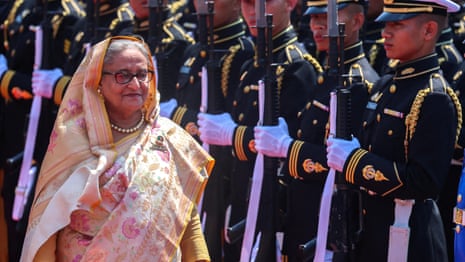
A special three‑member International Crimes Tribunal in Dhaka handed down a death sentence to ousted Bangladeshi leader Sheikh Hasina on Monday, a verdict delivered in a packed courtroom before a crowd of victims’ families and journalists. The 78‑year‑old former prime minister was tried in absentia after fleeing to India in August 2024 amid a mass uprising that forced her out of power. The July 2024 protests, which drew tens of thousands of demonstrators to the capital and saw some protesters occupying her official residence, ended with hundreds of deaths, according to the tribunal.
Judge Golam Mortuza Mozumder, head of the tribunal, announced the ruling, stating, “We have decided to inflict her with only one sentence – that is, sentence of death.” The court found Hasina guilty on three counts: incitement, ordering killings and failing to prevent the atrocities that occurred during the crackdown on protesters ¹. The verdict also implicated former Home Minister Asaduzzaman Khan, who was sentenced to death alongside her.
ICT prosecutor Shyikh Mahdi told Nikkei Asia that the charges against Hasina were based on her broader role in the killing spree that accompanied the July uprising. “The charges against Hasina were based on her broader role in the killing spree,” he said, emphasizing that the tribunal’s case rested on evidence of her command responsibility for the lethal force used against unarmed demonstrators.
Hasina, who has been residing in self‑exile in New Delhi since the uprising, denounced the judgment as “biased and politically motivated,” according to a statement released after the hearing. Her legal team, appointed by the state, argued that she could not be tried while remaining a fugitive and that any appeal would require her physical presence in Bangladesh.
The death sentence, the harshest ever imposed on a former Bangladeshi head of government, comes just months before parliamentary elections scheduled for February. The interim government led by Nobel laureate Muhammad Yunus has called for calm, warning that any attempt to disrupt public order will be met with strict measures. The verdict has sparked both solemn remembrance from victims’ families and protests from supporters of the Awami League, who view the trial as a politically driven exercise.