

ABUJA — Reactions have trailed President Bola Ahmed Tinubu’s declaration that Nigerians will begin to experience measurable reductions in transportation costs from October 1, 2026.
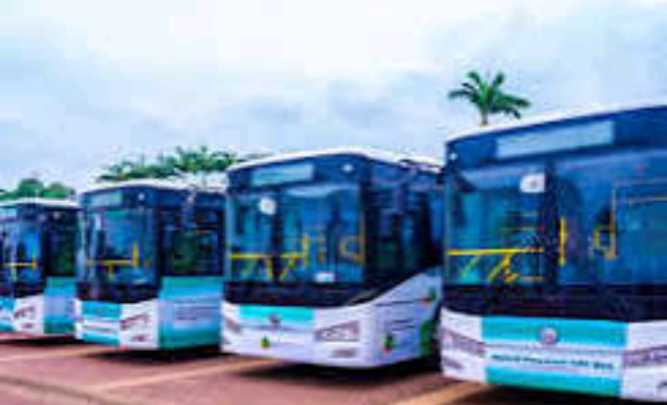
The President said the reduction is already visible in several states where CNG-powered and electric buses have brought down fares on major routes, and that more Nigerians will feel the impact from Independence Day.
“On August 27, I met with the governors of our 36 states, and we agreed on a clear objective. From October 1, more Nigerians should begin to see measurable reductions in transportation costs,” Tinubu said.
The statement, released on Saturday through his Special Adviser on Information and Strategy, Bayo Onanuga, followed a meeting with the 36 state governors to discuss strategies to crash transportation costs nationwide.
Following that meeting, an implementation committee for the National Affordable CNG Transit Programme was established under the Nigeria Governors’ Forum, chaired by Kwara State Governor AbdulRahman AbdulRazaq. The committee is working with the Presidential Initiative on Compressed Natural Gas and Electric Vehicles, Pi-CNG and EV, state governments and other stakeholders to identify priority transport corridors.
Tinubu cited examples from across the country as proof of progress. He said in Borno State, CNG-powered and electric public transport now charges between N50 and N100 on routes where commercial operators charge N300 to N600.
In Kaduna State, he said 100 CNG buses provide free transportation on major routes, carrying 3.2 million passengers and saving commuters over N3.5 billion in the first year.
In Oyo State, he said the Lagos-Ibadan fare dropped from N8,000 to N3,200 on CNG buses deployed to Pacesetter Transport during initial deployment.
In Adamawa State, fares were cut by 50 percent from N8,000 to N4,000, while in Enugu State, where 100 CNG buses have been deployed, the Enugu-Nsukka fare was reduced from N2,500 to N1,500.
In Plateau State, government-supported buses carry about 13,000 commuters daily at N200 versus N500 commercially.
In Abuja, through partnership with the National Union of Road Transport Workers, fares on CNG-converted vehicles have dropped with a 40 percent reduction. Area 1 to Gwagwalada dropped from N1,500 to N900, Nyanya from N700 to N420, and Wuse from N400 to N240.
The President said vehicles running on CNG can spend 60 to 80 percent less on fuel than petrol-powered ones, so operators’ running costs should fall and so should fares.
The Pi-CNG and EV had earlier said in a communique issued on September 10 after a stakeholders meeting that transportation fares are expected to reduce nationwide from October 1.
The meeting brought together commissioners of transport from various states to review deployment. According to the communique, Niger State has procured 200 CNG buses with 35 already operational, Abia has deployed 40 electric buses and 20 charging stations with plans to increase to 100 by December, Ogun has acquired 1,500 electric motorcycles and over 20 battery-swapping stations, Cross River has deployed 720 electric vehicles, and Delta has 13 conversion centres and four CNG stations.
The Federal Government also announced plans to roll out an additional 500 CNG refuelling stations, bringing the national target to 1,000 stations. More than 120,000 vehicles have already been converted to CNG.
However, the announcement has sparked mixed reactions among Nigerians, especially online. While some welcomed the initiative as a step toward cushioning the effects of subsidy removal, many others expressed disbelief and anger.
Within minutes of the announcement, social media responses painted a different picture, with many Nigerians saying they were yet to feel any reduction in their daily commute.
Critics described the claim as political propaganda and accused the government of being disconnected from the reality on the ground where fares have continued to rise.
“This work has become even more urgent amid the current global energy crisis. We already have evidence from across Nigeria of what is possible when cheaper energy translates into cheaper transportation,” Tinubu said, adding that considerable work was already underway to put necessary arrangements in place ahead of October 1.